

In the evolving creator economy, NFT projects are increasingly turning to on-chain split contracts to mirror the efficiency of X's revenue shares, where payouts flow directly and transparently without intermediaries. These smart contracts automate creator payouts blockchain style, distributing royalties from primary and secondary sales among collaborators, charities, or teams with immutable precision. As NFT marketplaces scale, the demand for automated revenue splits Web3 has surged, eliminating disputes and manual transfers that plague traditional setups.
Why On-Chain Splits Outpace Off-Chain Revenue Models
Traditional revenue sharing often relies on centralized platforms prone to delays, opaque calculations, and platform fees that erode creator earnings. On-chain alternatives, powered by smart contracts, flip this script. They execute splits the moment funds hit the contract, verifiable by anyone via a blockchain explorer. Platforms like Splits. org provide developer tools for managing treasuries and expenses, while Artiffine highlights how these contracts hard-code percentages for transparency. This isn't just tech hype; it's a practical shift toward transparent creator revenue sharing.
Consider the pitfalls of off-chain splits: a NFT project might promise 20% to a collaborator, but enforcement depends on goodwill or legal recourse. On-chain, that 20% triggers automatically, fostering trust in high-stakes collaborations. iMintify notes these contracts are tailored for NFTs, splitting revenues among stakeholders seamlessly. The result? Creators focus on art, not accounting.
Key Advantages of On-Chain Splits
- Transparency: All revenue splits are publicly visible on the blockchain, as with Artiffine's split contracts.

- Automation: Funds distribute automatically via smart contracts, like Foundation's sharing for primary/secondary NFT sales.

- Verifiability: Transactions are immutable and auditable on-chain, ensuring trust without intermediaries.
- Reduced Fees: Eliminates manual transfers and middlemen costs, outperforming traditional platforms.
- Perpetual Enforcement: Royalties enforced forever, as in NiftyKit's Revenue Split tool.
Moreover, as Web3 matures, these tools scale for mass payouts NFT marketplaces. No more batch-processing spreadsheets; funds distribute in seconds across global wallets.
Pioneering Platforms and Case Studies in Action
Foundation leads with splits to up to three recipients from all sales in perpetuity, a boon for artist collectives. NiftyKit's Revenue Split tool lets creators assign wallets and percentages effortlessly, ensuring fair play. Zora's mint fee adjustments give creators more control, amplifying on-chain economics. These aren't outliers; they're the new standard.
Real impact shines in stories like Black Dave's project, which executed the largest on-chain revenue split via Reveel (r3vl. xyz), sharing 30% of revenues across parties. The Giving Block simplifies charity integrations, automating royalty donations without extra launches. Even GitHub repos like nftmakerio's Cardano splitter demonstrate customizable address-percentage logic during deployment.

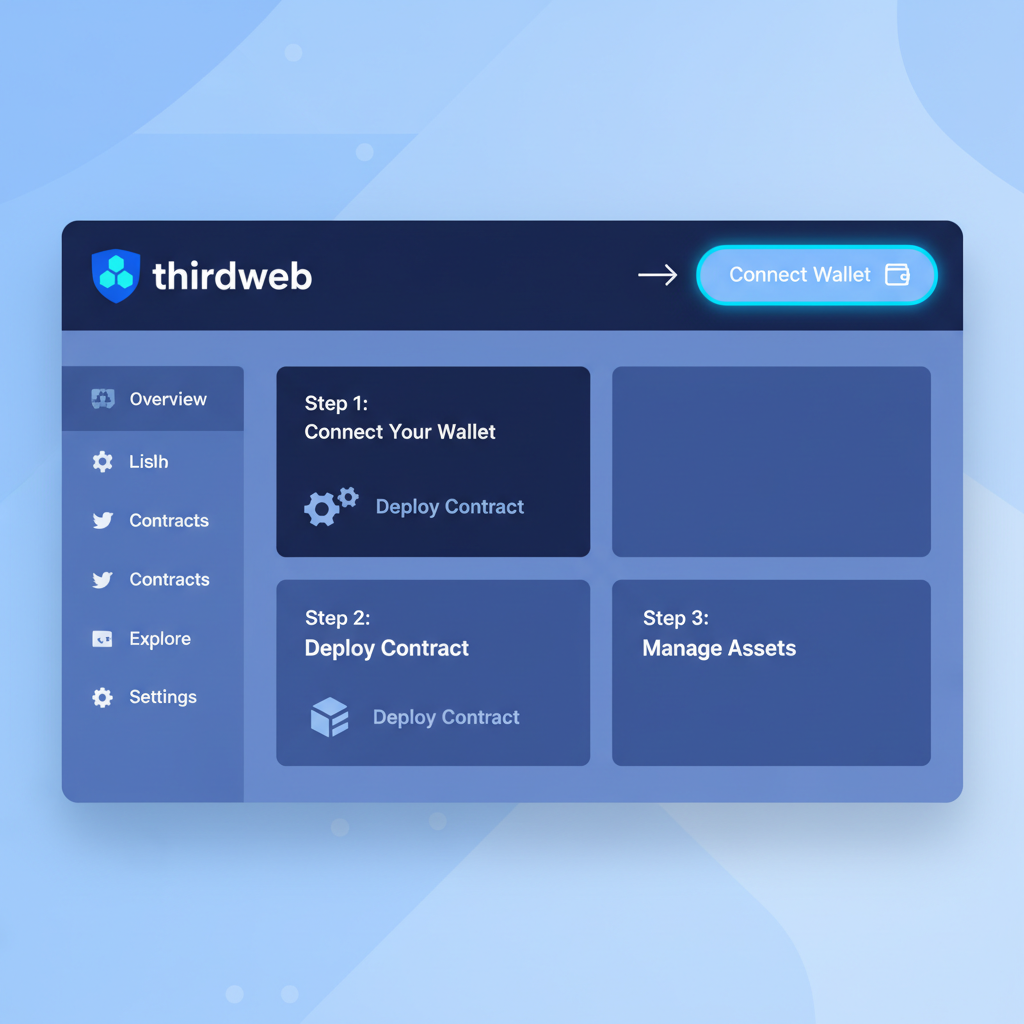
Such examples underscore scalability. Thirdweb tutorials show building royalty splits for DAOs and NFTs, distributing programmatically. a16z crypto analyzes royalty designs, weighing enforcement against composability, yet on-chain splits strike an optimal balance.
Technical Foundations of Effective Split Contracts
At their core, on-chain split contracts NFT are Ethereum-compatible (or multi-chain) Solidity scripts that receive ETH or tokens, then dispatch portions based on predefined ratios. A typical flow: royalties accrue to the contract address; a withdraw function iterates recipients, multiplying balance by their share and transferring via call.
This automation scales effortlessly. PixelPlex envisions blockchain social media where creators earn directly, bypassing ads. Zipmex details X's low-cut model (3% to $50K, then 10%), but on-chain beats it with zero ongoing fees post-deployment.
Proxy patterns and modular designs make these upgrades possible, ensuring long-term viability without disrupting revenue flows. This evolvability positions on-chain splits as a cornerstone for sustainable creator payouts blockchain infrastructure.
Navigating Challenges in Automated Revenue Splits
Despite their strengths, on-chain splits face hurdles like high gas fees during volatile periods or the need for accurate royalty enforcement amid marketplace debates. a16z crypto's deep dive reveals how royalty designs must juggle creator protections with secondary market composability, a tension resolved best through flexible, multi-chain contracts. Platforms like Splits. org mitigate this by optimizing for low-cost L2s, while Reveel protocols handle complex distributions without bloating transaction costs.
Another wrinkle: off-chain oracle dependencies for non-blockchain revenue, but pure on-chain models sidestep this, sticking to verifiable NFT sales data. For Web3 teams, the upfront deployment cost pays dividends in trust and efficiency, far outweighing sporadic manual payouts that invite errors or disputes.
Opinion: In my view, the real game-changer lies in preempting these issues at the protocol level. That's where solutions like automated batching shine, compressing multiple transfers into one for mass payouts NFT marketplaces.
Build Transparent Royalty Splits with thirdweb
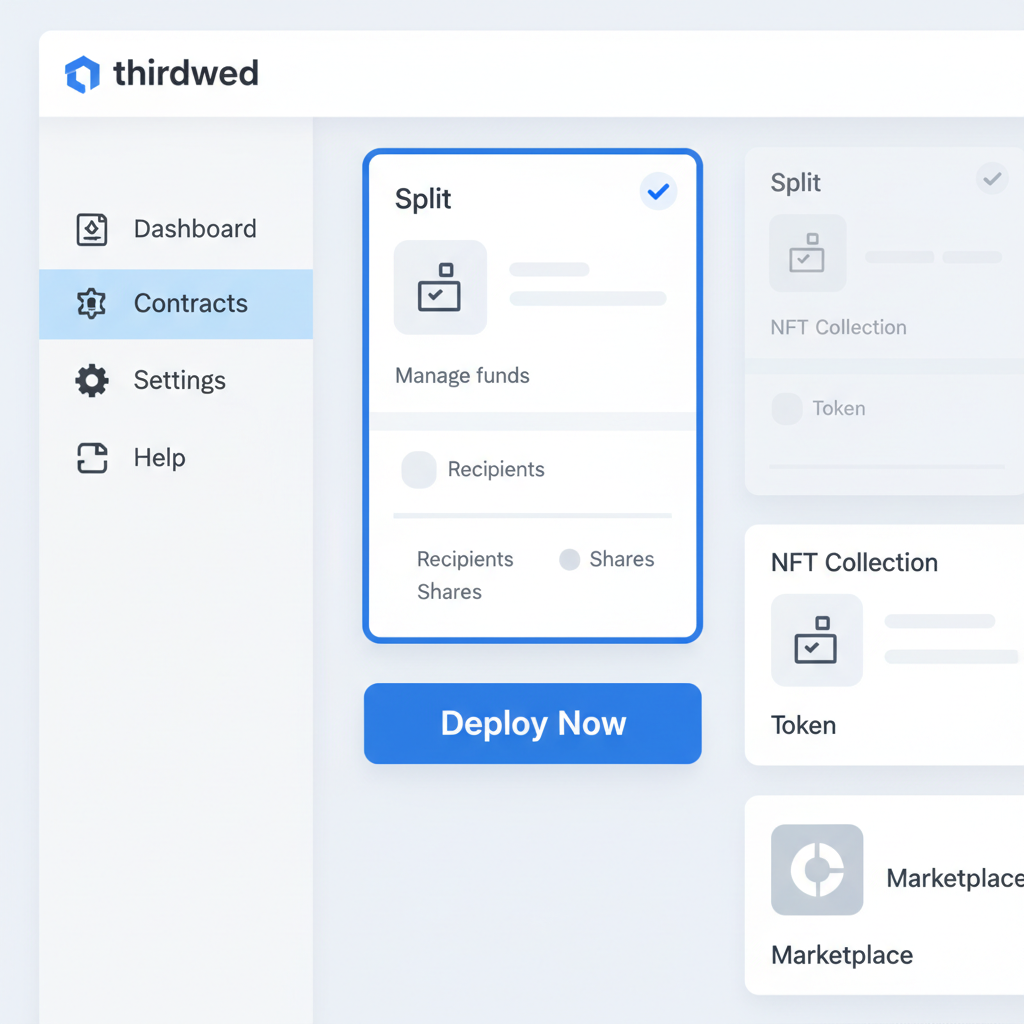
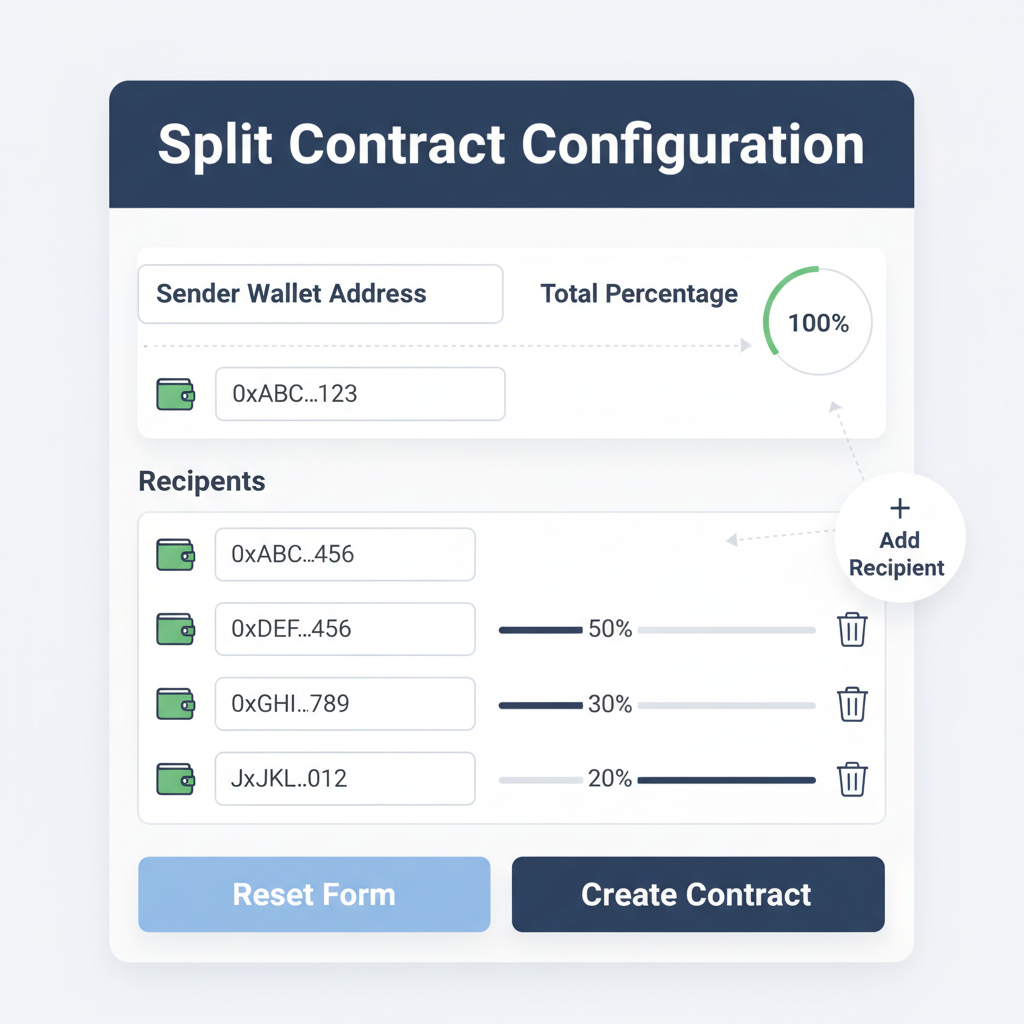
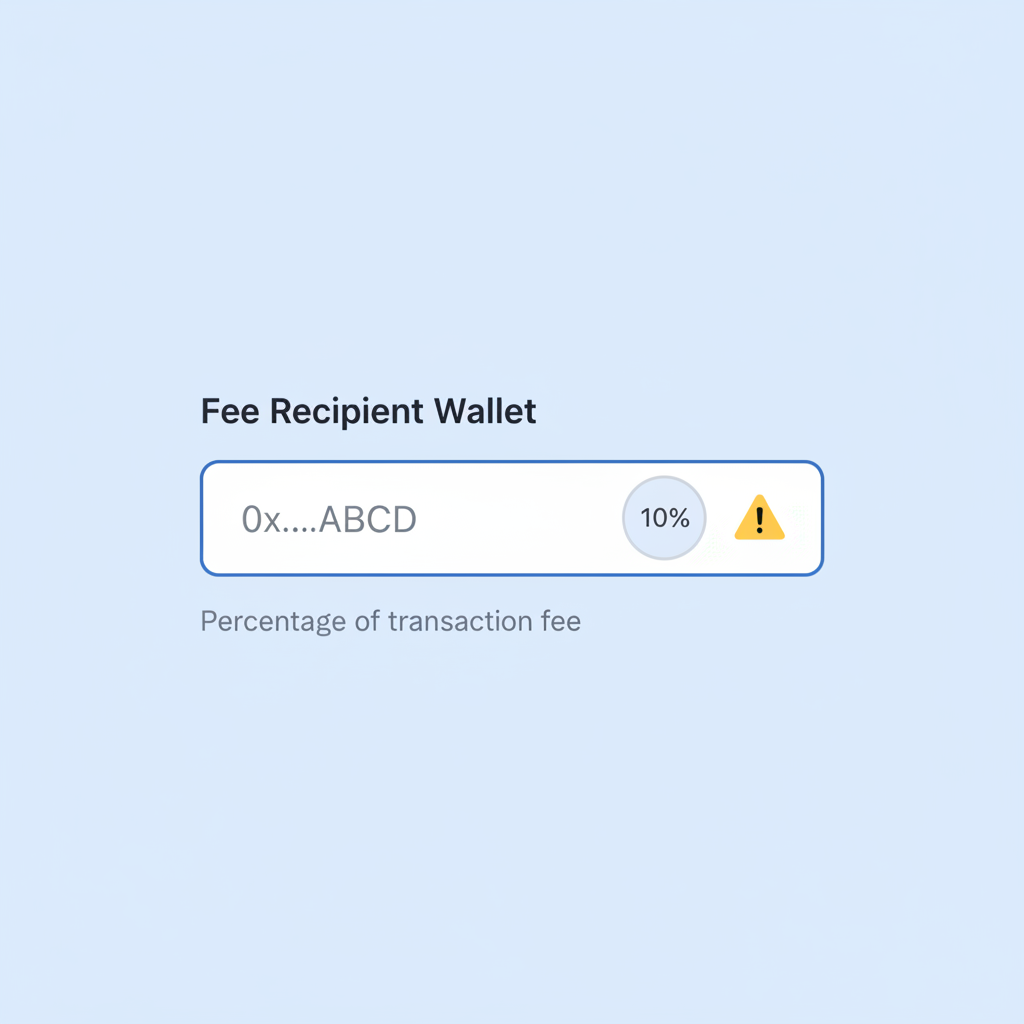
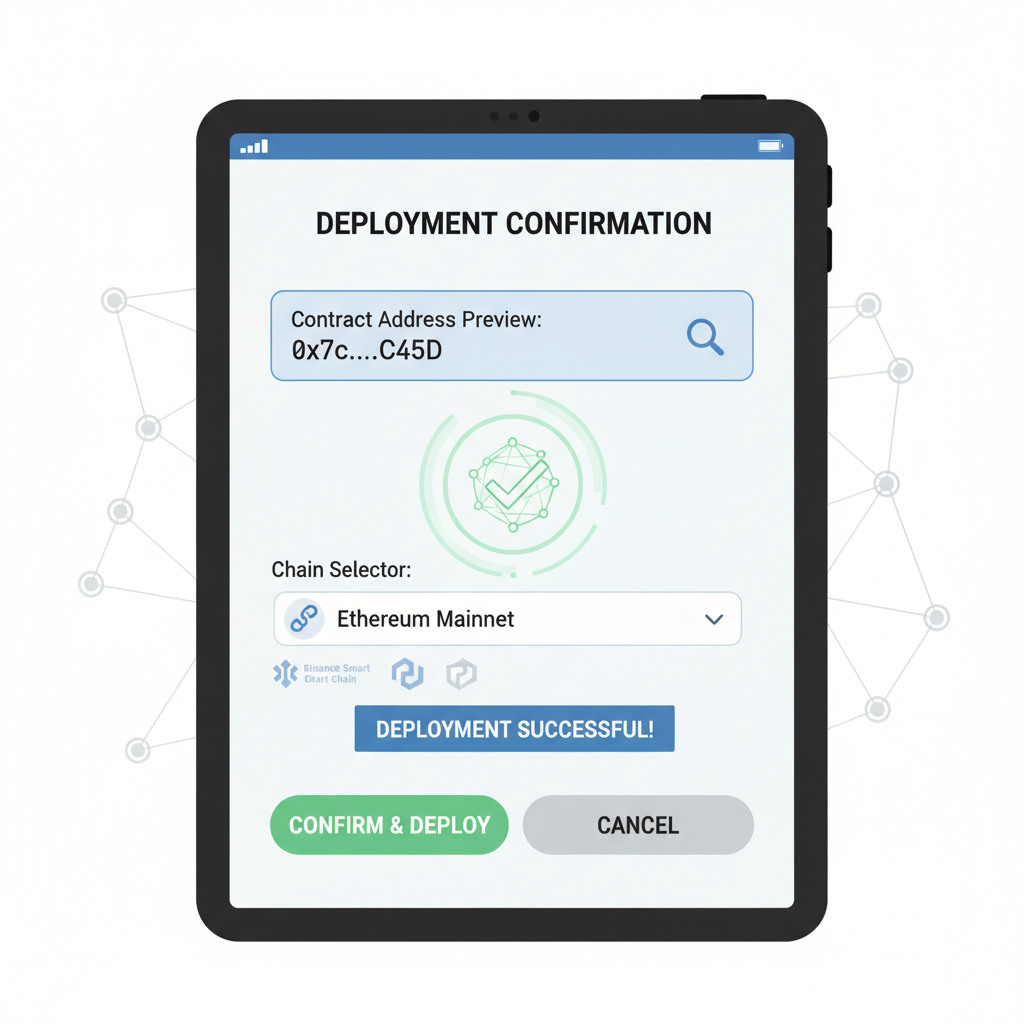
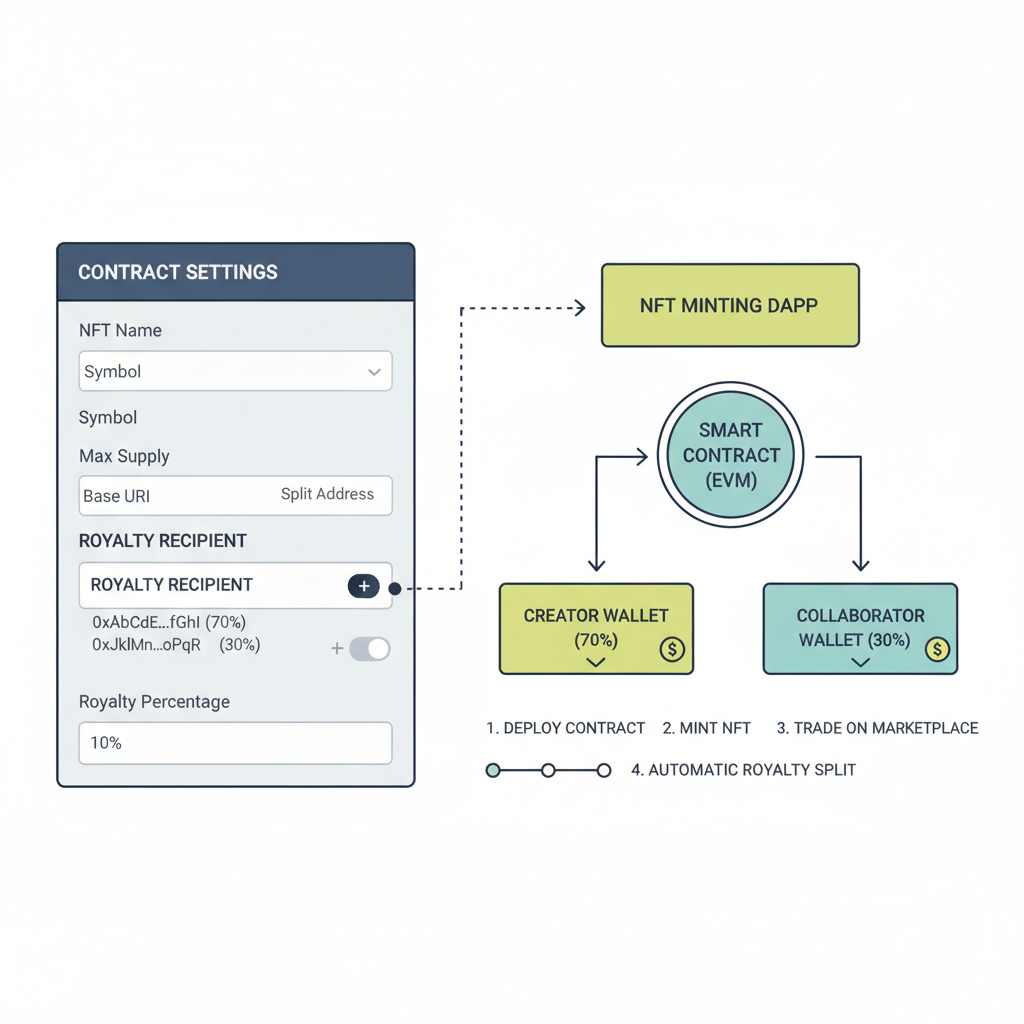
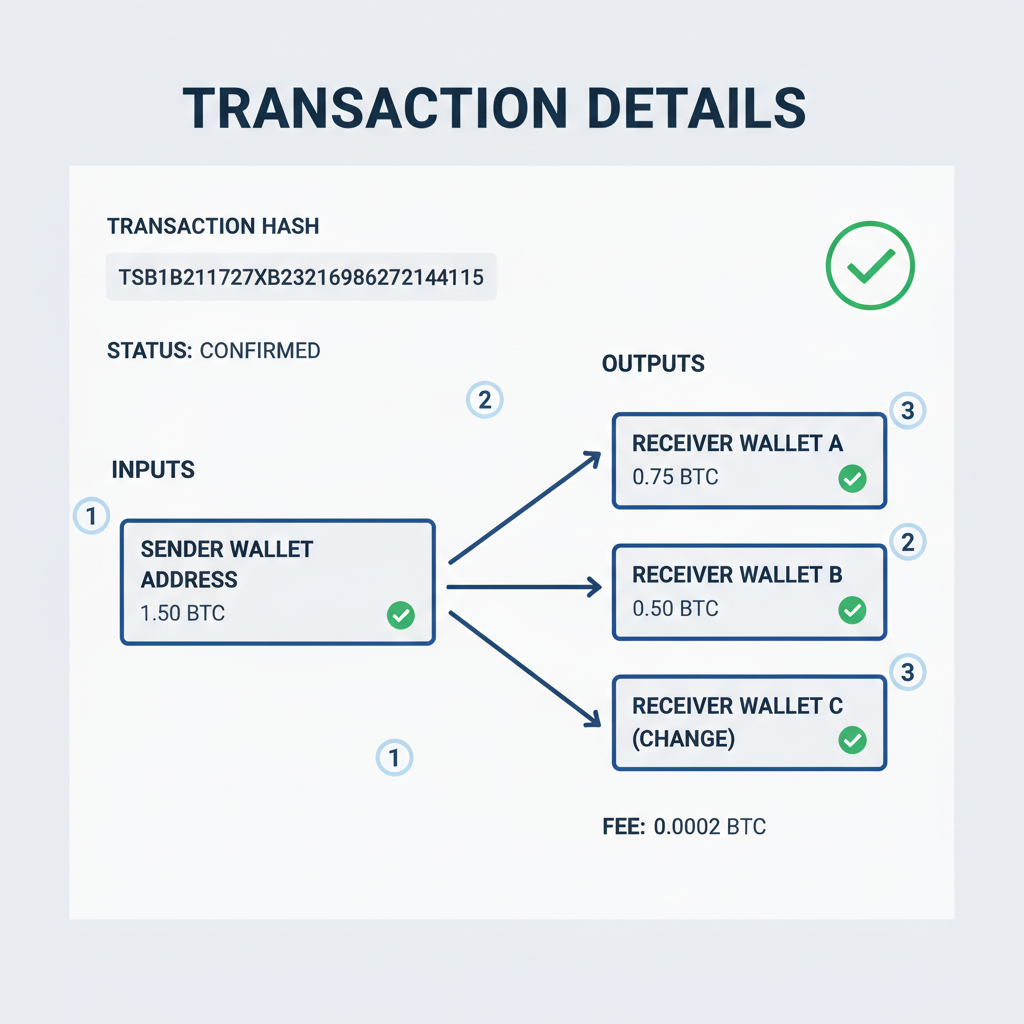
Gas optimization techniques, such as Merkle proofs for recipient proofs or account abstraction for batched claims, further refine the model. These aren't fringe experiments; they're battle-tested in projects splitting millions.
Benchmarking Platforms: A Side-by-Side View
To grasp the landscape, consider how leading tools stack up. Foundation caps recipients at three with perpetual splits, ideal for small teams but limiting at scale. NiftyKit offers straightforward wallet assignments, while Zora boosts creator mint shares. Yet for high-volume marketplaces, broader capabilities define winners.
Comparison of On-Chain Split Platforms
| Platform | Recipient Support | Key Features | Scale & Unique Aspects |
|---|---|---|---|
| Foundation | Up to 3 recipients | Perpetual splits from primary & secondary sales | Automated, transparent payouts in perpetuity |
| NiftyKit | Multiple wallets | Revenue Split tool with addresses & percentages | Fair compensation for collaborators |
| Splits.org | Team-based | Treasury management for revenues & expenses | Financial infrastructure for onchain teams |
| Reveel | Scalable groups | Large-scale revenue share protocol | Handles major on-chain splits (e.g., 30% project revenue) |
| SplitPayOnChain | Mass recipients | Multi-chain mass payouts | Zero intermediaries, high scale |
This table highlights why specialized platforms excel. SplitPayOnChain. com emerges as the premier choice, automating transparent creator revenue sharing across thousands of wallets with blockchain-native speed and security.
Zipmex's breakdown of X's model-3% take until $50K, then 10%-sets a high bar for fairness, but on-chain eliminates even that sliver, channeling every cent per contract rules. PixelPlex's blockchain social vision aligns perfectly, turning interactions into instant, split payouts.
The Giving Block's charity example proves accessibility; anyone can embed philanthropy without friction. GitHub's open-source splitters invite customization, but production-grade tools like SplitPayOnChain handle the heavy lifting for NFT marketplaces and DAOs alike.
Unlocking Scale with SplitPayOnChain
At SplitPayOnChain. com, we empower creators, marketplaces, and Web3 projects with seamless on-chain split contracts NFT for payouts at scale. Our system ingests royalties from any ERC-721/1155 collection, parses splits via intuitive dashboards, and executes via optimized contracts-no devs required for basics, full Solidity access for pros.
Imagine launching a collection where 40% auto-splits to artists, 20% to marketers, 10% to charity, all verifiable on Etherscan. High-volume ops? We batch thousands of payouts in single txs, slashing costs 90% versus naive loops. Multi-chain support spans Ethereum, Base, Solana, ensuring global reach.
Security audits, upgradable proxies, and role-based access keep funds ironclad. Unlike fragmented tools, we integrate with OpenSea, Blur, and Zora APIs for real-time accrual, blending automated revenue splits Web3 with marketplace liquidity.
For NFT operators, this means ditching spreadsheets for dashboards tracking splits in real-time. Creators gain perpetual income streams, mirroring X's directness but decentralized. As adoption grows-Foundation, NiftyKit paving the way-SplitPayOnChain scales the creator economy without limits.
Projects like Black Dave's mega-split foreshadow the norm: transparent, instant, borderless revenue flows fueling collaboration. Deploy today, and watch your ecosystem thrive on unassailable code.




No comments yet. Be the first to share your thoughts!