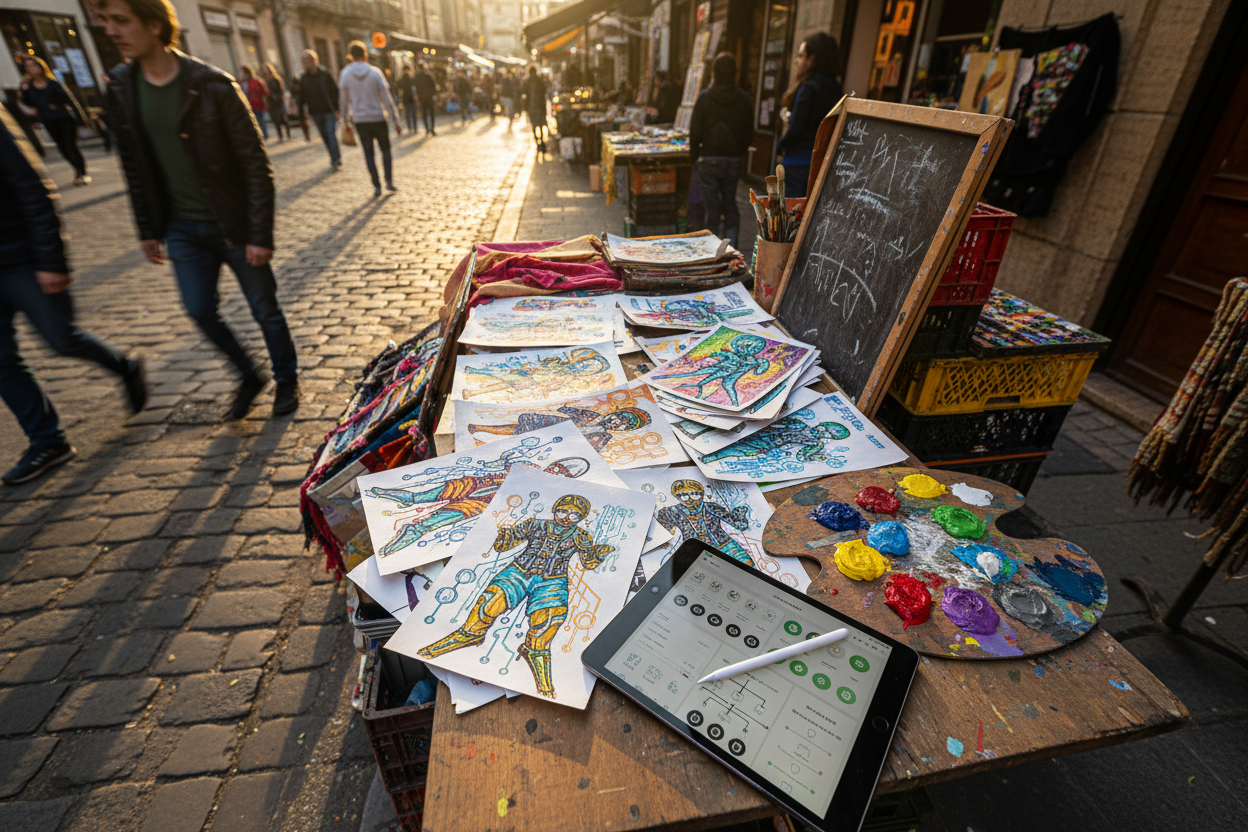
In the bustling world of NFT marketplaces, where digital art flips hands in seconds and fortunes shift with a single bid, creators often watch their royalties evaporate into the ether of unenforced promises. Enter smart contracts NFT marketplaces: self-executing code that flips the script, automating creator payouts with unyielding precision. Platforms like SplitPayOnChain. com are leading the charge, embedding revenue splits directly on-chain to ensure artists get their due, every time.

This isn’t just tech hype; it’s a structural fix for a flawed system. Traditional marketplaces rely on voluntary compliance for royalties, but smart contracts enforce them at the protocol level. As NFT sales surge, on-chain NFT payouts become non-negotiable, turning one-off sales into perpetual income streams for creators.
Decoding Smart Contracts for Creator Revenue Splits
At their core, smart contracts are blockchain-hosted programs that trigger actions when conditions are met-no middlemen, no disputes. In NFT ecosystems, they handle minting, transfers, and crucially, NFT sales revenue splits. Picture this: an NFT resells for ETH; the contract instantly divvies up proceeds, sending 10% to the original creator, 5% to collaborators, and the rest to the seller. Sources like OpenSea define them as purpose-built code living eternally on-chain, while ilink. dev highlights their role in automating payouts, royalties, and escrow.
I’ve managed portfolios long enough to appreciate automation’s power in reducing human error. Here, it scales to high-volume marketplaces, processing thousands of transactions without a hitch. Pedals Up on Medium nails it: smart contracts automate most processes, baking in transparency that builds trust.
Royalties on Autopilot: From EIP-2981 to Real-World Enforcement
Royalties have evolved from nice-to-have to must-have, with standards like EIP-2981 standardizing how NFTs signal payout info. Creators set their percentage-say, 5-10%-and marketplaces query the contract to execute splits automatically. Pontem Network explains that most platforms now support this, paying out on every secondary sale. Yet, enforcement varies; not all honor the signal, sparking community pushback.
Artists deserve ongoing value from their creations, not just a minting fee. Smart contracts make that reality, but only if marketplaces play ball.
Tools from Ahmad W. Khan’s guide, like no-code platforms such as NFT-Inator, let creators deploy royalty-enforced contracts for under $20. SplitPayOnChain takes it further with mass pay solutions, handling automated creator payouts NFT at scale for projects and marketplaces alike. MEXC. co spotlights trustless transactions, where contracts pay creators 10% on resales without privacy leaks.

• Telegram @GuardianAudits
• DM
• https://t.co/NUpdMM8Rn0
Why Marketplaces Are Betting Big on On-Chain Payouts
Scalability defines winners in Web3. Vocal. media outlines how optimized smart contracts automate NFT creation, sales, and royalty distribution, slashing costs by ditching banks and agents-Trioangle echoes this for clone scripts. For operators, it’s credibility: reliable payouts attract top creators, boosting listings and volume.
DEV Community stresses proper implementation as the foundation for platforms serving creators and collectors. With SplitPayOnChain’s blockchain-powered splits, high-volume payouts become effortless, secure, and transparent. Challenges like non-compliant marketplaces persist, but evolving standards promise tighter integration, ensuring on-chain NFT payouts stick.
While the promise shines bright, hurdles like inconsistent marketplace adoption and blockchain scalability demand savvy navigation. Platforms ignoring EIP-2981 royalties undermine the ecosystem, leaving creators high and dry. Yet, as a portfolio manager who’s seen markets pivot on execution, I view this as a maturation phase. On-chain enforcement tools are rising, with no-code options democratizing access.
Overcoming Enforcement Gaps with Robust Standards
Enforcement isn’t optional; it’s the bedrock of trust. When marketplaces query NFT contracts via EIP-2981’s royaltyInfo function, payouts trigger seamlessly-say, 10% to the creator on every resale, as mexc. co illustrates with real-world examples. Non-compliant platforms face backlash, but solutions like SplitPayOnChain embed splits at the protocol layer, bypassing reliance on marketplace goodwill. This shifts power back to creators, ensuring NFT sales revenue splits flow predictably.
Pontem Network notes most major markets now bake in royalty selection, yet gaps persist. The fix? Hybrid models combining on-chain signals with off-chain incentives, plus community-driven standards. For high-stakes projects, this means auditing contracts rigorously-updated context from 2026 highlights NFT-Inator’s $20 deployments as a game-changer for solo creators testing these waters.
Transparency scales confidence. ilink. dev outlines risks like smart contract vulnerabilities, urging best practices in audits and modular design. I’ve advised institutions on similar tech; the key is balancing innovation with resilience, much like diversified portfolios weather volatility.
Scaling for the Creator Economy: SplitPayOnChain in Action
Volume defines viability. Trioangle’s clone scripts automate trades and verifications sans intermediaries, but SplitPayOnChain elevates this with mass payouts at scale. Imagine processing thousands of automated creator payouts NFT in one transaction-effortless, gas-optimized, and verifiable. Vocal. media emphasizes optimized contracts for NFT creation to distribution; here, it’s purpose-built for marketplaces handling surges in digital art flips.
For operators, it’s a magnet for talent. Ahmad W. Khan’s royalty tools guide underscores how automated payments boost credibility, drawing artists wary of ghosted royalties. Creators gain perpetual streams; collaborators get precise splits; collectors enjoy frictionless trades. DEV Community’s blueprint for NFT platforms starts with these functions-minting, transferring, splitting-all automated.
Pedals Up captures the essence: smart contracts’ role dwarfs manual ops, injecting transparency that fosters loyalty. In my view, this isn’t mere tech; it’s economic rearchitecture, where smart contracts NFT marketplaces evolve from speculative playgrounds to sustainable hubs.
Looking ahead, as standards tighten and layer-2 scaling matures, on-chain NFT payouts will standardize. Challenges like non-honor of royalties fade with protocol-level mandates. Platforms adopting now-like those leveraging SplitPayOnChain-position for dominance, turning every resale into shared prosperity. Creators, no longer sidelined, thrive in a system that pays to play.
About the Author