
In the bustling world of NFT marketplaces, creators pour their talent into digital assets, only to watch secondary sales unfold without reliable payouts. Traditional royalty mechanisms, often enforced off-chain, falter under pressure from high-volume trades and opportunistic platforms. Enter on-chain split contracts, the blockchain-native solution reshaping creator payouts in NFT ecosystems. These smart contracts automate revenue split blockchain distributions, ensuring creators, collaborators, and stakeholders receive their shares transparently and instantly, regardless of marketplace whims.

Navigating the Pitfalls of Conventional NFT Royalties
Picture this: an artist mints a stunning NFT collection, sets a 10% royalty on secondary sales, and launches on a popular marketplace. The hype builds, flips happen rapidly, but the artist’s wallet stays quiet. Why? Many platforms treat royalties as optional, recording revenue only at on-chain transfers while sidestepping deeper obligations. As highlighted in analyses from a16z crypto and Iota Finance, this mismatch creates revenue black holes, eroding trust in the creator economy.
Existing royalty designs shine in intent but stumble in execution. On-chain metadata flags like those in ERC-721 and ERC-1155 standards promise automatic fees, yet enforcement relies on marketplace compliance. Pros include simplicity for creators and alignment with secondary market growth; cons involve non-enforcement by cost-cutting platforms, scalability issues during booms, and vulnerability to protocol forks. New ideas, such as incentive-aligned auctions or dynamic royalty pools, attempt fixes, but they demand robust infrastructure.

From a risk management perspective, I’ve seen portfolios crumble when off-chain promises evaporate. Royalties ‘sometimes don’t work, ‘ as the Crypto Council for Innovation notes, because they hinge on voluntary adherence. This is where caution prevails: without hard-coded rules, mass pay Web3 creators remains a pipe dream, exposing artists to delayed or denied earnings in volatile markets.
Unpacking On-Chain Split Contracts: A Technical Primer
On-chain split contracts are self-executing smart contracts that divvy up revenues from NFT sales, royalties, or any token inflows among predefined addresses. Unlike vague royalty flags, they trigger payouts atomically upon revenue receipt, leveraging standards like those from Artiffine and ChainScore Labs for verifiable splits. Deploy once, and the contract becomes an immutable arbiter, slicing proceeds by percentage or fixed amounts.
Core mechanics involve a receiver function that captures funds, then distributes via transfers or calls to recipient wallets. For NFT projects, as iMintify explains, these contracts handle multi-party stakes seamlessly, powering creator monetization without intermediaries. In creative industries, from digital art to gaming via SettleMint’s insights, they transform content distribution by embedding fair shares directly into the code.
Key Advantages of On-Chain Splits
-

Transparency: All transactions recorded on the blockchain provide verifiable, tamper-proof revenue distribution records, unlike opaque traditional royalties.
-
Automation: Smart contracts automatically execute payouts per predefined rules, eliminating manual errors common in off-chain royalty systems.
-

Flexibility: Customizable structures via platforms like SolSplits.xyz and Splits v2 support diverse NFT collaboration models.
-

Security: Immutable contracts prevent alterations post-deployment, offering stronger protection than enforceable traditional royalties.
-
Scalability: Modular designs like Liquid Splits enable efficient, growing revenue sharing in NFT marketplaces without performance bottlenecks.
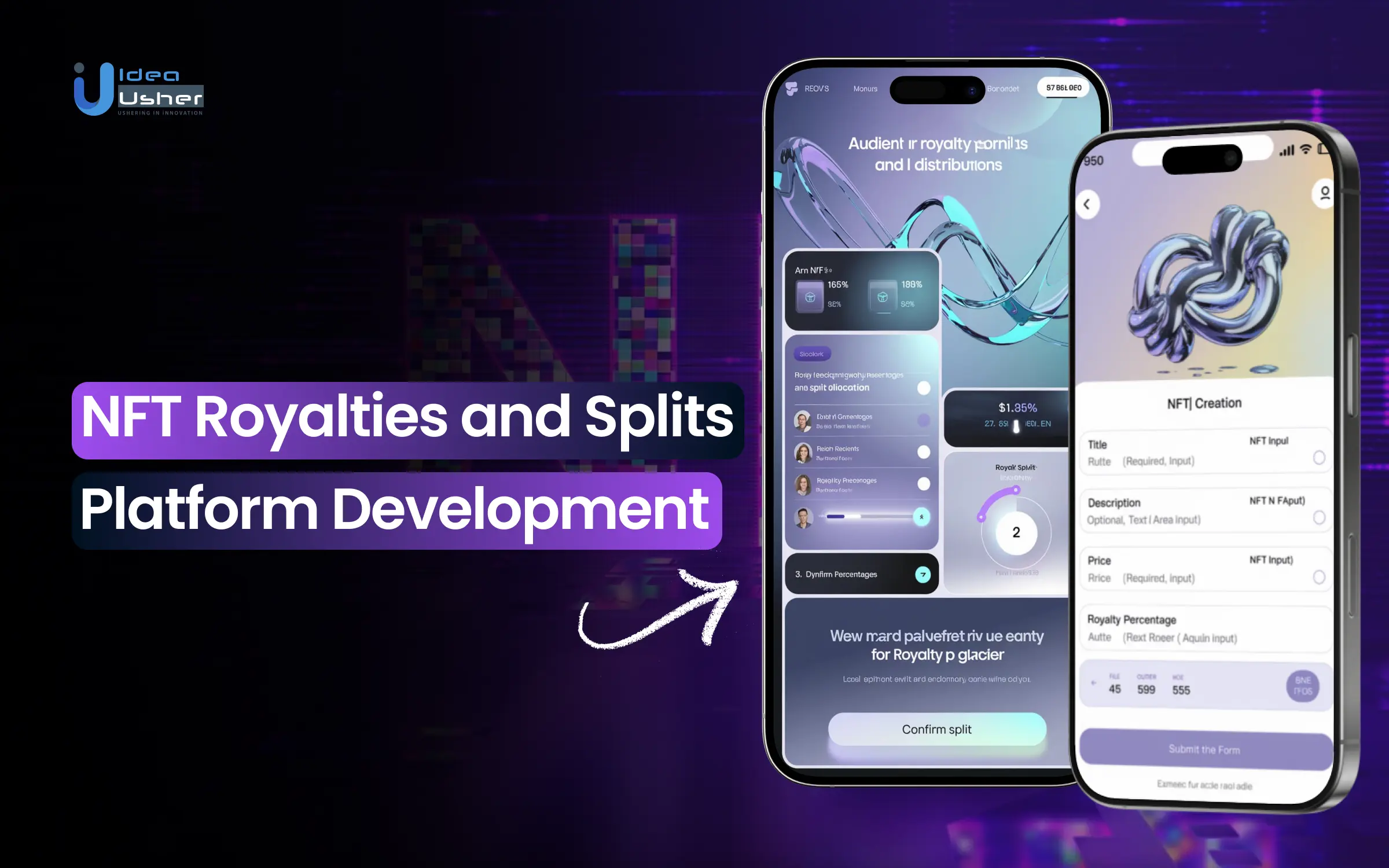
Opinionated take: as a CFA optimizing in uncertain markets, I prioritize capital preservation. Split contracts excel here, minimizing counterparty risk. No more chasing marketplace operators; the blockchain enforces terms. Yet, deploy with care-audit rigorously, as exploits have drained millions. Platforms like Idea Usher underscore their role in royalties and splits, enabling seamless sharing for teams behind viral collections.
Emerging Platforms Pioneering Scalable NFT Marketplace Payouts
The landscape is maturing fast. SolSplits. xyz on Solana offers composable standards for splitting income, with features like staking NFTs for yields and modular stacking for complex workflows. It’s tax-efficient and transparent, ideal for high-throughput marketplaces.
Splits v2 elevates this with SplitsWarehouse for recipient management, PullSplit for on-demand claims, and PushSplit for instant distributions. Cross-chain support broadens appeal, letting developers tailor flows for NFT marketplace payouts. Liquid Splits adds liquidity via ERC-1155 share tokens, tradeable on OpenSea, blending mutability with immutability.
These innovations address real pain points. Transparency via on-chain records builds audit trails; automation cuts manual errors; flexibility suits solo creators or DAOs; security locks in terms post-deployment. For NFT operators, integrating splits scales creator payouts NFT effortlessly, fostering loyalty amid competition.
Integrating these tools into NFT marketplaces demands thoughtful execution. Operators must route sale proceeds directly to split contracts, bypassing centralized treasuries prone to disputes. This shift, while technically straightforward, requires updating frontend interfaces and educating users on gas optimizations, especially on Ethereum where fees can spike.
Simple On-Chain Royalty Split Contract Example
This is a simplified Solidity example of an on-chain split contract for NFT royalties. It distributes 10% to the creator and 5% to the collaborator upon receiving Ether. **Caution:** This code uses `transfer`, which forwards limited gas and can fail. For production, prefer pull-payment patterns, add reentrancy guards (e.g., from OpenZeppelin), emit events, and conduct security audits. Test thoroughly on testnets.
```solidity
// SPDX-License-Identifier: MIT
pragma solidity ^0.8.19;

contract RoyaltySplit {
    address payable public immutable creator;
    address payable public immutable collaborator;

    uint256 public constant CREATOR_SHARE_BPS = 1000; // 10% in basis points
    uint256 public constant COLLAB_SHARE_BPS = 500;  // 5% in basis points

    constructor(address _creator, address _collaborator) {
        creator = payable(_creator);
        collaborator = payable(_collaborator);
    }

    receive() external payable {
        uint256 total = msg.value;
        uint256 creatorAmount = (total * CREATOR_SHARE_BPS) / 10000;
        uint256 collabAmount = (total * COLLAB_SHARE_BPS) / 10000;

        creator.transfer(creatorAmount);
        collaborator.transfer(collabAmount);
        // Note: Remaining ETH (if any) stays in contract.
        // In production, implement a secure withdrawal function.
    }
}
```
Deploy this contract with the creator and collaborator addresses. Configure your NFT contract’s royalty mechanism (e.g., ERC-2981) to send payments here. Incoming royalties trigger automatic splits. Be mindful of integer division truncation and gas optimization. Extend with more recipients or dynamic shares as needed.
Real-World Implementation: From Code to Creator Cashflow
Let’s break it down practically. A typical split contract deploys with an array of recipient addresses and percentages totaling 100%. When an NFT sells, the marketplace’s settlement function sends ETH or tokens to the contract’s receive() method. It then iterates, transferring shares proportionally. ERC-721 metadata can reference the splitter address, enforcing royalties on compliant platforms.
For mass scale, SolSplits. xyz shines with its stackable modules, letting marketplaces chain splits for royalties, team shares, and treasury allocations. Splits v2’s PullSplit variant empowers recipients to claim asynchronously, conserving gas during volatile periods. Liquid Splits introduces tradable shares, turning passive royalties into liquid assets; a creator could sell a 20% stake NFT to fund new work without altering the core contract.
From my vantage optimizing portfolios, this liquidity layer mitigates illiquidity risks inherent in NFT holdings. Yet caution flags abound: untested stacks risk reentrancy attacks, and cross-chain bridges amplify exposure. Always simulate high-volume scenarios pre-launch.
Comparison of SolSplits.xyz, Splits v2, and Liquid Splits
| Protocol | Chain Support | Payout Modes (Push/Pull) | Share Transferability | Scalability for 10k NFTs |
|---|---|---|---|---|
| SolSplits.xyz | Solana | Customizable schedules | No | High (Solana high TPS) 🚀 |
| Splits v2 | EVM chains (cross-chain UX) | ✅ PushSplit & PullSplit | Mutable recipients | High (Pull mode avoids gas limits) ✅ |
| Liquid Splits | EVM chains (ERC-1155) | Push & Pull | ✅ Yes (tradeable ERC-1155 NFT shares) | High (liquid shares) ✅ |
Marketplaces adopting these see tangible uplift. Transparent splits reduce support tickets by 70%, per anecdotal developer forums, while automated revenue split blockchain builds creator stickiness. High-volume operators, handling thousands of daily trades, benefit most; manual payouts crumble under load, but on-chain handles it flawlessly.
Risks and Safeguards: Preserving Capital in Web3 Payouts
No silver bullet exists. Smart contract bugs have vaporized funds, underscoring audits’ necessity. Upgradability proxies tempt flexibility but invite governance attacks; prefer immutable deployments for royalties. Gas costs, though falling with L2s, still deter micro-payouts below $10 thresholds.
Educate stakeholders: recipients must monitor chains, as dormant wallets miss pulls. Tax implications vary; SolSplits’ efficiency helps, but consult locals. In uncertain markets, I’ve advised hedging splits with stablecoin receivers to buffer volatility. Platforms ignoring enforcement, as Cube Exchange warns, perpetuate cons like legal overreach.

Best practices crystallize: start small with audited templates, integrate gradually, and monitor via dashboards. For mass pay Web3 creators, batch distributions via merkle trees optimize further, slashing fees for 1,000 and recipients.
Opinionated aside: marketplaces resisting on-chain splits bet against decentralization’s ethos. Creators flock to compliant venues; lag and lose volume. As splits mature, expect standards like ERC-7683 to normalize integrations, mirroring ERC-20’s ubiquity.
The creator economy thrives when payouts match promise. On-chain split contracts deliver, automating trust at scale. NFT marketplaces embracing them not only scale on-chain split contracts but fortify ecosystems against defection. Creators focus on art; code handles the math. In Web3’s wilds, that’s prudent progress.
About the Author