
The embedded finance 2026 market shift
The infrastructure of business-to-business commerce is undergoing a fundamental rewrite. By 2026, B2B payments are projected to reach $33.3 trillion, with embedded payments capturing a significantly larger share of that volume [src-1]. This surge is not merely a growth metric; it represents a structural migration from legacy banking rails to onchain infrastructure, where financial services are no longer external utilities but integrated components of the transaction itself.
The broader embedded finance market is forecast to exceed $138 billion by 2026, with embedded capital alone expected to reach up to $90 billion [src-6]. This capital formation is driven by platforms that have moved beyond simple payment processing to offer embedded lending, insurance, and liquidity directly within their workflows. The shift is defined by efficiency: reducing friction for buyers who increasingly prefer eCheck and digital wallets over traditional wire transfers, and for sellers who demand instant settlement and real-time reconciliation.
This transition is reshaping the competitive landscape. Companies that treat finance as a separate vertical are losing ground to those that embed it into the core product experience. The result is a market where speed, transparency, and accessibility are the primary currencies, and onchain technology provides the necessary settlement layer to support this new velocity.
Why onchain settlement matters for B2B
Traditional B2B payments operate on a legacy infrastructure that was never built for speed. When a company initiates a cross-border wire, the money often vanishes into a maze of correspondent banks, each taking a cut and adding days to the settlement window. This latency creates a cash flow trap: capital is tied up in transit rather than being deployed for growth. The cost is equally punishing. Foreign exchange spreads, intermediary fees, and compliance checks can erode margins on transactions that should be routine.
Onchain settlement changes the equation by removing the intermediaries. Instead of routing payments through a network of banks, onchain rails allow direct peer-to-peer transfer of value. This shift reduces the number of touchpoints, which directly lowers fees and accelerates settlement from days to minutes or seconds. For B2B operations, where transaction volumes are high and margins are tight, these savings compound significantly over time.
Reconciliation is another major pain point that onchain infrastructure addresses. Traditional banking relies on batch processing and end-of-day statements, making real-time visibility impossible. Onchain transactions are recorded on a public ledger, providing instant, immutable proof of payment. This transparency simplifies accounting, reduces the risk of errors, and allows finance teams to focus on analysis rather than chasing down missing funds.
The market is already responding to this efficiency. Embedded finance is now recognized as a $185 billion opportunity for B2B SaaS platforms, with less than 20% of the market currently captured. As more platforms integrate onchain payment rails, the gap between traditional and modern settlement methods will widen, making onchain infrastructure not just an option, but a necessity for competitive B2B operations.

How SplitPay Onchain Handles B2B Payments
SplitPay Onchain operates as an embedded finance layer that replaces traditional banking rails with smart contract logic. Instead of waiting for ACH clears or wire transfers, B2B transactions settle on-chain, allowing creators and platforms to automate payouts instantly. This architecture shifts the burden of reconciliation from manual accounting to automated code, ensuring that split contracts execute exactly as defined without intermediary delays.
1. Smart Contract Deployment
The foundation of SplitPay is a deployed smart contract that holds the payment logic. When a platform integrates SplitPay, it initializes a contract that defines the revenue split percentages and the wallet addresses of all participants. This contract acts as a neutral escrow, holding funds until the predefined conditions—such as a sale or subscription renewal—are met. By encoding the terms directly into the blockchain, the platform removes the need for trust in a third-party processor.
2. Automated Revenue Collection
Once the contract is live, incoming revenue flows directly into the smart contract rather than a traditional merchant account. The contract immediately recognizes the source of the funds and logs the transaction on-chain. This step is critical for transparency, as every dollar received is timestamped and attributable. For B2B partnerships, this means that revenue attribution is immutable and auditable in real-time, eliminating disputes over unpaid commissions or delayed reporting.
3. Instant Split Execution
Upon receiving funds, the smart contract automatically calculates each participant’s share based on the pre-set ratios. Unlike traditional systems that batch payouts weekly or monthly, SplitPay Onchain executes these splits instantly. The funds are then routed directly to the designated wallets of creators, affiliates, and partners. This instant liquidity allows businesses to manage cash flow more effectively, as partners receive their earnings immediately rather than waiting for end-of-cycle processing.
4. On-Chain Reconciliation
The final step is automated reconciliation. Because every transaction, split, and payout is recorded on the blockchain, generating financial reports requires no manual data entry. Stakeholders can view the complete history of transactions through a dashboard that reads directly from the contract state. This transparency reduces administrative overhead and ensures that all parties have access to the same verified financial data, fostering trust in the partnership.
Traditional Banking vs. SplitPay Onchain
The shift to onchain payments offers significant advantages over legacy banking methods. Traditional wire transfers and ACH payments are slow, often taking one to five business days to settle, and they incur high fees for both senders and receivers. SplitPay Onchain eliminates these frictions by providing near-instant settlement and lower transaction costs, making it ideal for high-volume B2B and creator economy payouts.
| Feature | Traditional Banking | SplitPay Onchain |
|---|---|---|
| Settlement Speed | 1-5 business days | Instant |
| Transaction Fees | High (wire/ACH fees) | Low (network gas) |
| Automation | Manual reconciliation | Smart contract logic |
| Transparency | Limited visibility | Full on-chain audit |
Implementing Real-Time Settlement Workflows
Integrating onchain payment logic into existing B2B platforms requires shifting from batch-based batch processing to event-driven settlement. For 2026 readiness, your infrastructure must handle finality within seconds, not days. This shift reduces counterparty risk and frees up working capital that was previously trapped in traditional clearing cycles.
The core of this integration is a smart contract layer that acts as an escrow or atomic settlement agent. Instead of relying on SWIFT or ACH notifications, your platform triggers onchain transactions when specific conditions are met. This logic ensures that payment and delivery or service completion are linked, eliminating the need for reconciliation between disparate ledgers.
To execute this, you need a reliable oracle or off-chain data feed to confirm the triggering event. This feed connects your internal order management system to the blockchain. When the oracle confirms the event, the smart contract releases funds to the vendor’s wallet. This process is automated, transparent, and immutable.
| Component | Function | Impact |
|---|---|---|
| Smart Contract | Escrow & Release Logic | Eliminates manual reconciliation |
| Oracle Feed | Off-Chain Event Confirmation | Ensures real-world data triggers onchain actions |
| Wallet Infrastructure | Custody & Transaction Signing | Secure execution of settlement instructions |
This architecture transforms embedded finance from a simple payment gateway into a complete operational settlement layer. It allows businesses to trust the system rather than the intermediary. The result is faster cash flow and reduced operational overhead.
Key questions on embedded finance 2026
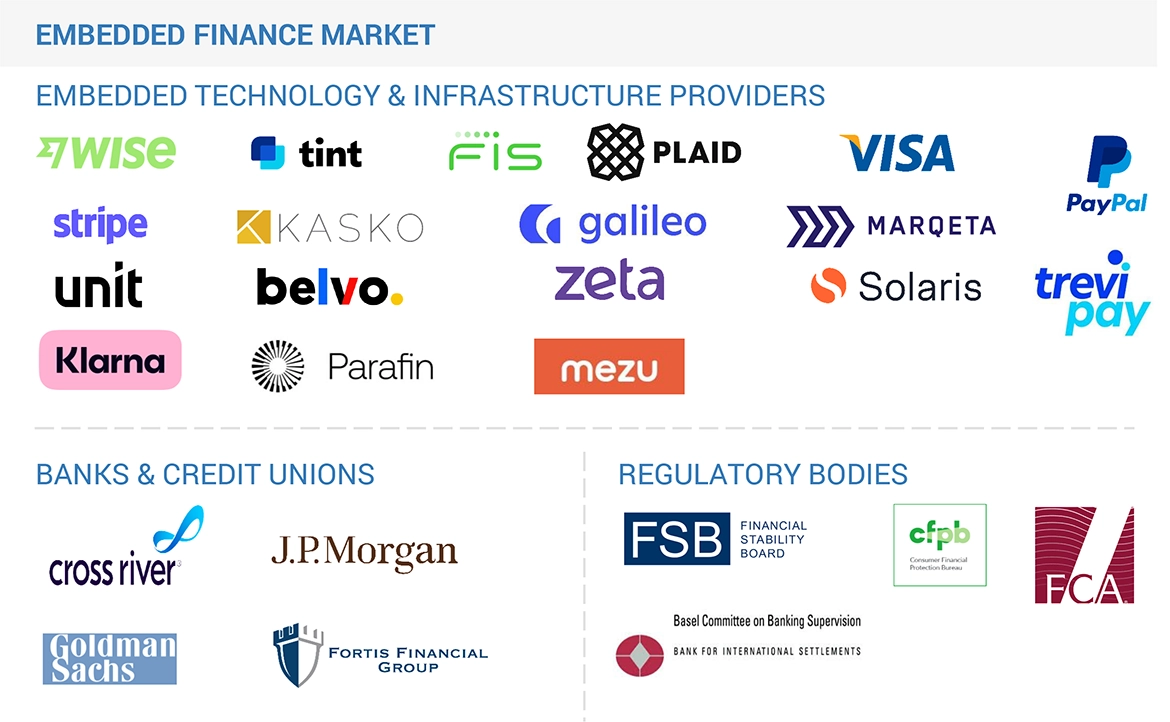
The market for embedded finance is shifting from experimental pilots to core infrastructure. As platforms integrate financial services directly into their workflows, the opportunity expands beyond simple payments into capital and risk management. Industry reports indicate that the global market is forecast to exceed $138 billion by 2026, with embedded capital alone projected to reach up to $90 billion [src-serp-6]. For B2B SaaS platforms specifically, the opportunity is estimated at $185 billion, yet less than 20% of this value is currently captured [src-serp-7].
No comments yet. Be the first to share your thoughts!