
How SplitPay Onchain Automates Revenue Sharing
SplitPay Onchain replaces the manual reconciliation of creator payouts with automated, on-chain revenue splitting. Traditional payment processors typically hold funds in escrow for days or weeks, creating cash-flow friction and requiring manual ledger updates. SplitPay Onchain eliminates this latency by executing splits directly within the transaction flow.
When a transaction occurs, the smart contract immediately allocates funds to each designated wallet according to pre-defined ratios. This real-time settlement ensures creators receive their share instantly, without waiting for batch processing cycles. The enforcement is cryptographic: once the contract is deployed, the split logic cannot be altered, guaranteeing financial accuracy and security for all parties involved.
This approach mirrors the efficiency of modern real-time payment networks but extends it to decentralized ecosystems. By embedding the split logic into the transaction itself, SplitPay Onchain removes the need for third-party intermediaries to verify or distribute funds, reducing both operational overhead and the risk of human error.
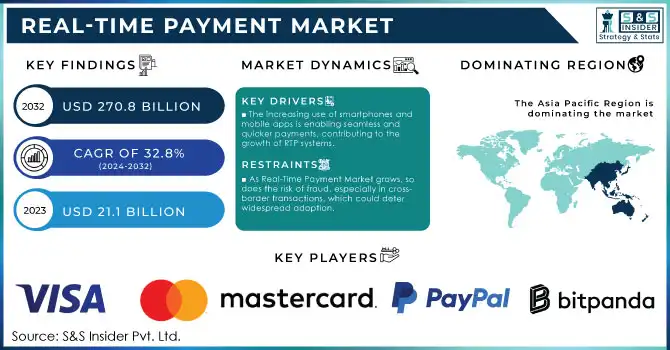
To understand the impact of this efficiency, consider how quickly funds move compared to traditional models. Traditional processors may take 2-3 business days to settle, while on-chain splits occur in seconds.
Calculate Your Revenue Split
SplitPay Onchain transforms the opaque nature of revenue sharing into a deterministic, on-chain calculation. By defining your distribution rules at the smart contract level, you eliminate the ambiguity of manual payouts and ensure that every participant receives their exact share instantly.
The following calculator estimates your net payout based on total revenue, defined split percentages, and estimated network fees. This tool provides a transparent view of the math behind the transaction, allowing you to verify that the distribution aligns with your agreements before execution.
This calculation reflects the immediate financial outcome of a single on-chain transaction. SplitPay Onchain processes these distributions atomically, meaning all transfers occur simultaneously within the same block. This atomicity ensures that no party is left waiting for settlement and reduces the risk of partial failures or reconciliation errors common in traditional banking rails.
While the calculator provides a precise estimate based on current inputs, actual gas fees may fluctuate slightly depending on network congestion at the time of execution. However, the core revenue split remains fixed by your smart contract logic, guaranteeing that the proportional distribution you set is preserved regardless of market volatility.
Compare SplitPay Onchain Alternatives
When managing revenue sharing on-chain, the difference between a streamlined solution and a manual workaround is often the difference between scalable growth and operational chaos. While SplitPay Onchain is engineered for creators who need real-time, automated distribution, other options like PYMSTR or basic multisig setups serve different niches. Choosing the right tool depends on your tolerance for complexity, your need for automation, and how you handle gas fees.
SplitPay Onchain vs. PYMSTR vs. Manual Multisig
The landscape of on-chain payment splitting falls into three distinct categories: specialized creator tools, affiliate-focused gateways, and raw blockchain infrastructure. Below is a comparison of how SplitPay Onchain stacks up against PYMSTR and manual multisig wallets across key operational metrics.
| Feature | SplitPay Onchain | PYMSTR | Manual Multisig |
|---|---|---|---|
| Setup Complexity | Low (Smart Contract) | Medium (API Integration) | High (Wallet Config) |
| Real-Time Splitting | Yes (Atomic) | Yes (Batch) | No (Manual Execution) |
| Gas Fee Efficiency | Optimized (Shared) | Standard (Per Tx) | High (Per Tx) |
| Automation Level | Full (Rule-Based) | Partial (API-Triggered) | None |
| Best For | Creators & Teams | Affiliates & Partners | Security-First Treasuries |
Understanding the Trade-offs
PYMSTR is designed primarily for affiliate networks and partner payouts. As noted in their documentation, PYMSTR splits a single payment across multiple wallets in one on-chain transaction, allowing you to set recipient amounts via API. This is excellent for structured affiliate programs but may lack the granular, rule-based automation that creators need for dynamic revenue shares. It acts more like a payment gateway than a smart contract backbone.
Manual Multisig setups (such as Gnosis Safe) offer maximum security and control but zero convenience. Every split requires a separate transaction or a complex manual execution process. While this reduces smart contract risk, it introduces significant operational friction. For a creator receiving frequent payments, the gas costs and time spent approving transactions can quickly outweigh the benefits.
SplitPay Onchain bridges this gap. By leveraging atomic smart contract execution, it ensures that revenue is split instantly and accurately at the moment of receipt. This eliminates the need for manual approvals or API polling, providing a seamless experience that scales with your audience.
Calculate Your Savings
To see how SplitPay Onchain compares in real-world scenarios, use the calculator below. Adjust the number of splits and transaction frequency to estimate potential gas savings and time efficiency gains compared to manual methods.
Smart Contract Royalty Mechanics
SplitPay Onchain moves beyond traditional payment gateways by embedding royalty distribution directly into the smart contract layer. This architecture ensures that revenue sharing is not a post-hoc accounting task but a real-time, immutable execution. When a transaction occurs, the smart contract automatically routes funds to the appropriate wallets based on pre-defined percentages, eliminating the risk of manual error or delayed payouts.
The system relies on atomic transactions, meaning every split happens in a single block. If the contract conditions are not met, the entire transaction reverts, protecting both creators and platforms from partial or failed payments. This level of financial accuracy is critical for high-stakes creator economies where trust and transparency are the primary currencies. By leveraging official blockchain standards, SplitPay Onchain provides a code-transparent environment where every cent is traceable.
To understand the financial impact, use the calculator below to estimate potential splits based on gross revenue and participant roles.

No comments yet. Be the first to share your thoughts!