
What SplitPay Onchain actually does
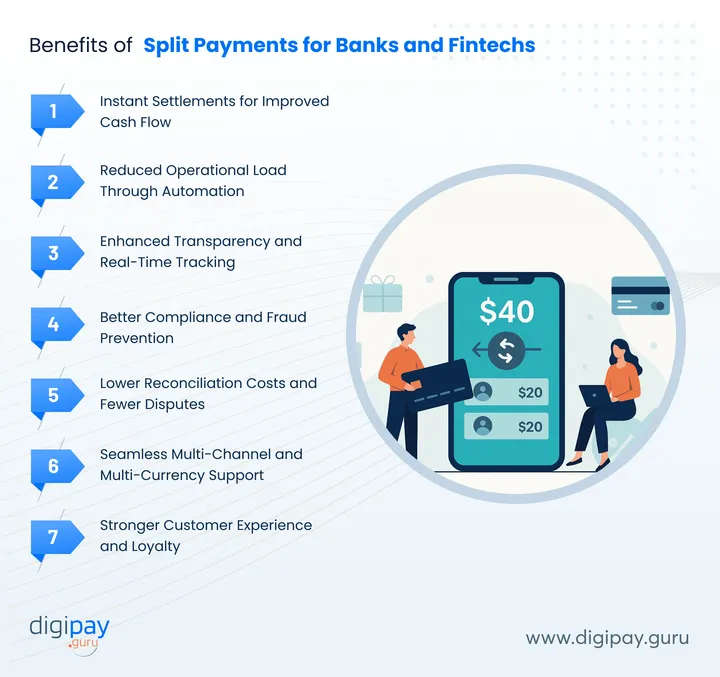
SplitPay Onchain automates the division of payments across wallets or accounts in real time, reducing manual reconciliation for creators and businesses. Instead of waiting for traditional banking rails to settle or manually calculating who owes what, the protocol executes the split instantly at the point of transaction. This mechanism turns complex group expenses into a single, atomic on-chain event.
The system works by locking funds in a smart contract and distributing them to predefined recipients based on set ratios or fixed amounts. For example, a freelancer splitting a project fee with two contractors can define those splits upfront. When the client pays, the contract immediately routes the correct portions to each wallet. This eliminates the need for follow-up invoices or chasing payments.
This approach aligns with broader trends in on-chain crypto for modern payments, where transparency and speed are prioritized. By moving expense splitting on-chain, users gain an immutable record of every division, making audits and accounting significantly simpler. It transforms a traditionally friction-heavy administrative task into a background process that just works.
The efficiency of this model becomes clear when comparing it to traditional methods. Manual splitting requires coordination, trust, and often delays. On-chain splitting removes the middleman and the wait. It is particularly useful for recurring expenses or collaborative projects where multiple parties need immediate, accurate compensation.
Setting up onchain split contracts
Configuring SplitPay Onchain for real-time expense splitting requires connecting your wallet, defining precise split ratios, and deploying the smart contract. This process ensures that funds are distributed instantly and transparently across all participants without manual intervention.

Why real-time splitting matters for creators
For creators, the gap between revenue generation and payout is often a gap in trust. Traditional payment processors operate on batch cycles—daily, weekly, or even monthly settlements—that tie up capital and obscure the exact source of income. Real-time expense splitting onchain changes this dynamic by decoupling the transaction from the settlement window. When a sale occurs, the split happens instantly, and funds are distributed to the relevant wallets in the same block or within seconds.
This immediacy does more than just speed up cash flow; it provides granular transparency. Creators can see exactly how much revenue was generated, how much was allocated to collaborators, and how much was retained as platform fees, all in a single, immutable record. This level of clarity reduces the administrative burden of reconciliation and eliminates the "black box" feeling of traditional ad-revenue models.
The friction of waiting for settlements also discourages micro-transactions. When creators know they will receive their share immediately, they can experiment with lower-priced digital goods or tips without worrying about minimum payout thresholds. This aligns the financial infrastructure with the way modern digital audiences actually interact—small, frequent, and spontaneous.
By moving these operations onchain, platforms leverage the inherent transparency of public ledgers. Every split is verifiable, reducing the need for intermediaries to audit payouts. This shift not only lowers operational costs but also empowers creators to take full ownership of their earnings, fostering a more sustainable and equitable creator economy.
Common mistakes in onchain payment setups
Configuring SplitPay Onchain for real-time expense splitting requires precision. Small misconfigurations in smart contract parameters or network selection can lead to failed transactions, stuck funds, or incorrect distribution ratios. Understanding these pitfalls helps ensure your onchain payment flows remain reliable and cost-effective.
Incorrect network selection
One of the most frequent errors is deploying SplitPay Onchain contracts on a network that lacks sufficient liquidity or has high gas volatility. If your users are on a legacy chain with congested mem pools, real-time splitting becomes unreliable. Always verify that the target chain supports the specific ERC standards required by your SplitPay implementation. Cross-chain bridges introduce latency that defeats the purpose of real-time splitting, so stick to a single, well-supported L1 or L2 for the primary transaction flow.
Hardcoded gas limits
Another common mistake is setting static gas limits for split transactions. Network congestion fluctuates, and a hardcoded limit might be too low during peak times, causing transactions to revert. This leaves users with partial splits or no splits at all, creating a poor experience. Instead, implement dynamic gas estimation based on current network conditions. This ensures that the contract has enough fuel to execute the complex logic of splitting funds among multiple recipients without failing.
Ignoring decimal precision
Onchain assets have varying decimal places. Ethereum uses 18 decimals, while stablecoins like USDC often use 6. A common error is applying a uniform decimal adjustment across all tokens, leading to rounding errors that accumulate over time. These small discrepancies can result in users receiving pennies less than their share. Always configure SplitPay Onchain to respect the native decimal precision of each specific token being split. This maintains accuracy and trust in the distribution mechanism.
Tracking performance with onchain data
Monitoring SplitPay Onchain transactions requires looking at the blockchain itself rather than relying on traditional banking ledgers. On-chain crypto payments offer a transparent record of every split, allowing you to verify that funds are moving in real time without waiting for batch settlements.
You can track these flows using block explorers or specialized analytics dashboards. By watching the contract address where the split occurs, you can confirm that each participant receives their share immediately upon execution. This visibility is essential for maintaining trust in high-stakes financial environments where timing matters.
To ensure the system is performing correctly, keep an eye on gas fees and transaction latency. High network congestion can delay the finalization of splits, so monitoring these metrics helps you anticipate delays before they impact your cash flow. For a broader view of the market conditions affecting these transactions, you can observe current activity levels below.
Helpful gear
Use these product recommendations as a starting point, then choose the size, material, and price point that fit how you actually use the gear.


As an Amazon Associate, we may earn from qualifying purchases.
No comments yet. Be the first to share your thoughts!