
How SplitPay Onchain Works
Traditional split payments are mostly administrative chores. They rely on manual tracking, delayed bank transfers, and reconciliation that happens days or weeks after the money moves. SplitPay Onchain changes this by moving the split logic into a smart contract. The contract becomes the single source of truth for how revenue is divided, executing the distribution the moment a transaction settles.
This distinction matters because it shifts the burden from human coordination to code. In a standard off-chain setup, a platform must manually calculate shares, initiate transfers, and hope the funds arrive on time. With SplitPay Onchain, the smart contract holds the funds in escrow and releases them to each creator’s wallet based on pre-agreed percentages. This eliminates the lag between earning and receiving.
The mechanism is straightforward but powerful. When a customer pays for a digital product or service, the funds enter the contract. The contract immediately reads the distribution rules—whether that is a 50/50 split between two collaborators or a more complex tiered structure—and sends the appropriate amounts to each participant’s address. There is no waiting for a monthly payout cycle or a manual approval process.
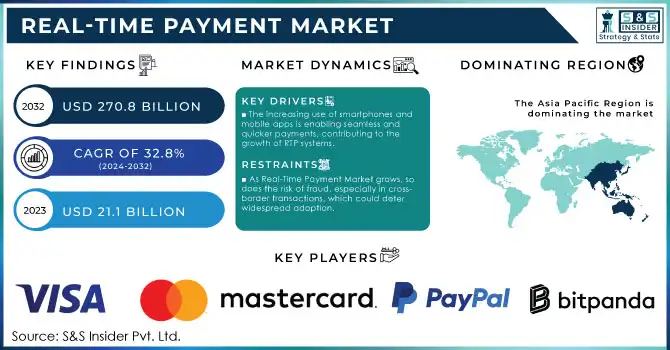
This real-time capability aligns with the growing demand for instant liquidity in the creator economy. As the real-time payment market expands, platforms are increasingly expected to provide immediate access to funds rather than holding them in reserve. By automating these splits on-chain, SplitPay ensures that creators are paid instantly and accurately, reducing administrative overhead and building trust through transparent, immutable records.
Calculate Your Revenue Splits
Onchain splits remove the guesswork from revenue sharing. Instead of manually calculating percentages or waiting for end-of-month reconciliations, SplitPay uses smart contracts to distribute funds instantly based on your exact agreement.
This transparency ensures every creator, partner, or collaborator receives their precise share immediately. There are no hidden fees or ambiguous accounting periods. The math is public, immutable, and executed the moment a transaction clears.
Use the calculator below to model your potential payouts. Enter your total revenue and the percentage allocated to each party to see exactly how much each wallet receives.
Compare SplitPay Onchain Features
Traditional payment processors often treat revenue sharing as a batch process, settling funds days after the transaction occurs. This creates a cash flow gap for creators who rely on immediate income. SplitPay Onchain addresses this by leveraging blockchain infrastructure to automate splits in real time.
The table below contrasts the operational mechanics of SplitPay Onchain against standard centralized payment gateways. While traditional systems prioritize merchant consolidation, onchain solutions prioritize instant, transparent distribution.
| Feature | SplitPay Onchain | Traditional Gateway |
|---|---|---|
| Settlement Time | Instant (block confirmation) | 2-3 business days |
| Automation Level | Smart contract (code-based) | Manual or API-dependent |
| Fee Structure | Network gas + small platform fee | 2.9% + $0.30 per transaction |
| Transparency | Public ledger verification | Internal dashboard only |
Speed and cost are the primary differentiators. Traditional processors, such as those described by Stripe, often require complex reconciliation for split payments, adding administrative overhead. SplitPay Onchain removes this friction by encoding split rules directly into the transaction, ensuring creators receive their share without manual intervention.
Common Questions About SplitPay
SplitPay Onchain simplifies revenue sharing by moving complex financial logic onto the blockchain. Instead of relying on manual reconciliation or third-party intermediaries, the protocol handles the division automatically. This ensures that creators and partners receive their exact share in real time, reducing administrative overhead and minimizing errors.
How does Split Pay work?
Split Pay functions by dividing a single transaction into multiple smaller payments. For example, if a creator earns revenue from a digital product, the smart contract automatically routes a specific percentage to the creator, another to a collaborator, and the rest to platform fees. This mirrors how services like Esusu Split Pay allow users to break large rent payments into manageable installments, but it operates continuously for ongoing revenue streams rather than one-time bills. The process is transparent, with every split recorded on the public ledger for all parties to verify.
What is an example of a split payment?
A split payment occurs when a transaction is divided between multiple payment methods or among multiple people. In the context of SplitPay Onchain, imagine a podcast partnership where two hosts co-create an episode. When a listener buys a subscription, the revenue is instantly split 50/50 between their digital wallets. This is similar to splitting a restaurant bill, but instead of calculating tips and taxes manually, the blockchain executes the division instantly and accurately. Stripe notes that this method is essential for marketplaces and platforms managing complex payout structures.
Why use onchain split payments?
Traditional banking systems often delay payouts by several days, creating cash flow uncertainty for creators. Onchain split payments settle in seconds or minutes, depending on the network. This speed allows creators to reinvest earnings immediately into production or marketing. Additionally, because the rules are coded into the smart contract, there is no need for trust in a central administrator. The code enforces the agreement, ensuring that every stakeholder gets paid exactly what they are owed, every time.
No comments yet. Be the first to share your thoughts!